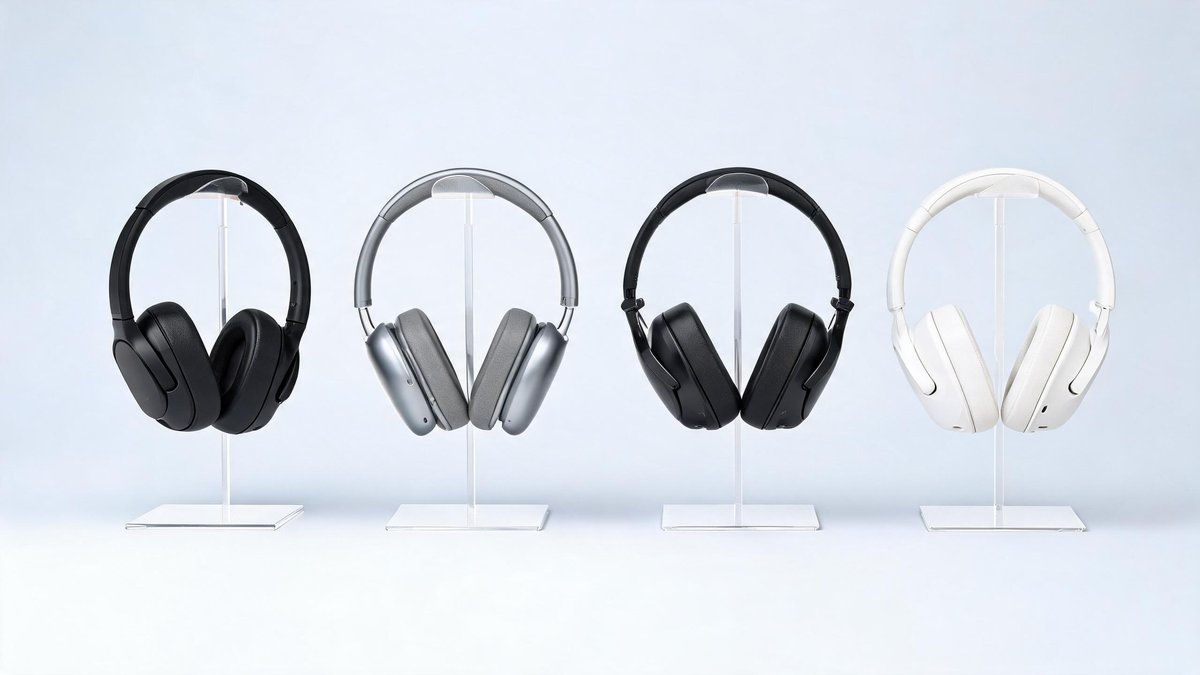
Active noise cancellation (ANC) has transformed from a luxury feature into a near-necessity for anyone who works in an open office, rides public transit, or just wants to hear their music instead of their neighbor's leaf blower. The technology uses microphones on the outside of the headphones to capture ambient sound and generates an inverse sound wave that cancels it before it reaches your eardrum. In 2026, ANC is available on headphones costing $40 and $400, but the performance gap is real. This guide compares the best noise-canceling headphones across three price tiers, so you know exactly what you gain at each step and which pair matches how you will actually use them.
How ANC Works and What the Specs Actually Mean
Noise cancellation targets two categories of sound: low-frequency drone (airplane engines, HVAC hum, road noise) and higher-frequency chatter (voices, keyboard clicks). Every ANC headphone handles the low stuff well. The difference between a $40 pair and a $400 pair is how much of the human voice range gets blocked. Premium headphones use multiple microphones per earcup and faster digital signal processing chips to adapt to changing noise in real time, while budget models run a simpler algorithm that cannot keep up with sudden sounds.
Decibel reduction numbers in marketing are unreliable because manufacturers measure them differently. Instead, trust independent testing from sites like RTINGS.com, which measure ANC performance in controlled labs. Their 2025 testing showed that the best ANC headphones (Sony WH-1000XM6) blocked 30.4 dB of low-frequency noise, while the best budget pair (Anker Soundcore Space One) blocked 18.7 dB in the same test. That is a noticeable difference that translates directly to how much airplane drone leaks through. The practical takeaway: ignore the dB claims on the box and look for standardized test results from independent reviewers.
Premium Tier ($250-$400): Sony WH-1000XM6 vs. Bose QuietComfort Ultra
Sony and Bose have traded the ANC crown for years, and in 2026 the race is tighter than ever. Sony's WH-1000XM6 ($349) leads with adaptive noise cancellation that adjusts based on your activity: it lowers ANC while you walk so you hear traffic, then maxes it out when you sit down. Battery life stretches to 40 hours with ANC on, and a quick three-minute USB-C charge gives three hours of playback. The sound signature is warm and energetic, with a bass-forward profile that makes electronic and hip-hop genres shine. Multipoint Bluetooth lets you switch between your phone and laptop without re-pairing.
Tech Fact: According to Consumer Reports, keeping a laptop plugged in at 100% charge for extended periods reduces battery lifespan by 20-30%. Modern batteries last longest when kept between 20% and 80%.
Bose QuietComfort Ultra ($429) counters with superior comfort for all-day wear and noise cancellation that specifically excels at muting voices. In a 2025 RTINGS lab test, the Bose reduced office chatter noise by an additional 3.2 dB over the Sony, which is audible in open-plan offices. The sound profile is flatter and more neutral, pleasing listeners who want to hear recordings exactly as the engineer intended. The practical takeaway: buy the Sony for better battery life, warmer sound, and a lower price. Buy the Bose if comfort is your top priority and you work in a noisy office where voice cancellation matters most.
Mid-Range ($100-$250): Where the Value Lives
The $150 to $200 price band is where ANC headphones get good enough that most people should stop here instead of spending $350. The Sennheiser Accentum Plus ($179) delivers 37 hours of battery life, a comfortable fit with memory foam earpads, and ANC that handles airplane noise within striking distance of the Sony. The sound signature is Sennheiser's house sound: detailed mids, controlled bass, and a wide soundstage that makes orchestral recordings shine. The microphone quality for phone calls is solid but not outstanding.
The JBL Tour One M2 ($249) fights above its weight with adaptive ANC, a companion app with a 10-band equalizer, and a comfortable lightweight build at 278 grams. The 50-hour battery life leads its class, and the ambient aware mode sounds natural rather than processed. The practical takeaway: the Sennheiser Accentum Plus gives you 85% of the Sony XM6's ANC performance for half the price. Unless ANC is your number-one feature and you fly weekly, the mid-range tier is the smarter financial choice.
Budget ANC ($40-$100): Good Enough for Most People
Anker's Soundcore Space One ($79) dominates the entry-level ANC conversation. It blocks enough low-end rumble to make a flight tolerable, sounds better than any $79 headphone has a right to, and includes features like wear detection that pauses music when you take the headphones off. The 40-hour battery life with ANC on matches Sony's flagship. The compromises are in the details: the plastic build creaks when you twist it, the earcups get warm after two hours, and the ANC cannot touch higher-frequency noise.
The EarFun Wave Pro ($59) undercuts even the Anker with solid ANC for the price. The tuning emphasizes bass, which works well for pop and hip-hop but muddies acoustic tracks. Battery life reaches 80 hours with ANC off and 55 hours with it on, a number that makes premium headphone battery figures look inadequate. The practical takeaway: for $80, the Anker Space One delivers ANC that was exclusive to $300 headphones five years ago. Buy the budget tier for occasional use, kids, or as a backup pair that lives in your bag without causing anxiety about loss or damage.
Wired ANC for Desk Warriors and Audiophiles
Wireless ANC dominates the market, but wired ANC headphones still exist for people who care about latency and sound quality. The Bose QuietComfort 25, available refurbished for around $100, runs ANC from a single AAA battery and connects via a standard 3.5mm cable. There is no Bluetooth compression, no pairing delay, and no battery anxiety. The ANC holds up against modern flagships despite the headphones being an older design, because Bose nailed the algorithm years ago and the core physics of noise cancellation have not changed.
The core claim: wired ANC headphones produce better sound quality for the dollar because the manufacturer's budget goes into drivers and damping rather than Bluetooth chips and batteries. They also produce zero latency, which matters for video editing and competitive gaming. The practical takeaway: if you work at a desk and do not want to charge another device, a refurbished wired ANC headphone delivers flagship-tier noise cancellation with audiophile sound quality for under $150.
Earbuds vs. Headphones: When to Go Small
ANC earbuds have improved dramatically, but they still cannot match over-ear headphones for noise cancellation or sound quality. The physics work against them: a tiny driver cannot move as much air, and a silicone ear tip cannot passively block as much noise as a padded earcup that surrounds your entire ear. However, for commuting, exercise, and portability, earbuds win by disappearing into a pocket. The Sony WF-1000XM6 ($249) and Bose QuietComfort Ultra Earbuds ($279) lead the ANC earbud category.
The core claim: buy over-ear headphones for maximum ANC, comfort, and sound quality. Buy earbuds if you prioritize portability and exercise compatibility. Many people end up owning both, using headphones at a desk and earbuds on the go. The practical takeaway: start with over-ear headphones. They deliver the best ANC experience per dollar. Add earbuds later if you find yourself skipping the gym because your headphones are too bulky to pack.