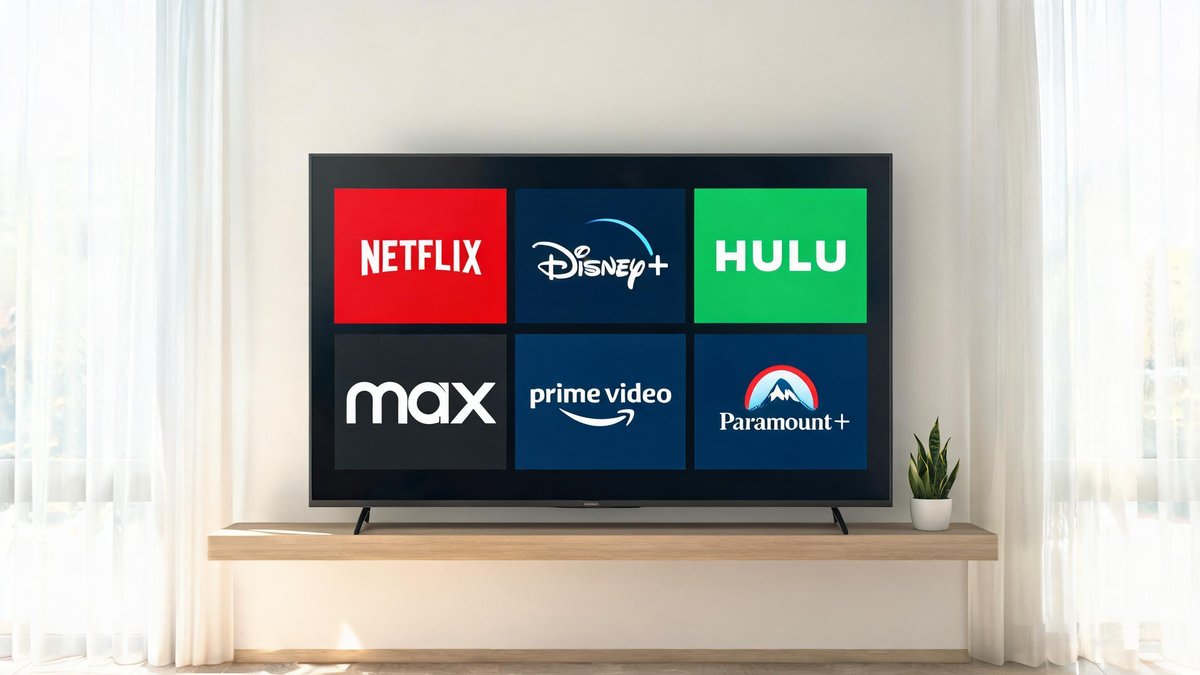
The average household in the United States now pays for 4.7 streaming subscriptions, according to a 2026 Deloitte survey. That number has more than doubled since 2020, and the total monthly cost often surpasses what people used to pay for cable. With every network and studio launching its own platform, deciding which services to keep and which to cut has become a recurring headache. Price hikes, password-sharing crackdowns, and ad-tier introductions in 2025 and 2026 have only made the decision harder.
We reviewed the seven most popular streaming platforms to help you figure out which ones are worth the money. Our rankings weigh content quality, pricing transparency, user experience, and how well each service justifies its recurring charge.
Netflix: Still the King of Variety, But at a Price
Netflix enters 2026 with 283 million global subscribers and a content budget exceeding $17 billion annually. No other service matches its output volume or genre range. In a given month, you can watch a Korean thriller, a British baking competition, a big-budget original film, and a true-crime documentary without leaving the app. The recommendation algorithm gets better every year, and the app experience across phones, TVs, and tablets remains the smoothest in the industry.
The pricing, however, keeps climbing. The ad-supported tier costs $6.99 per month, the Standard plan with two simultaneous streams runs $15.49, and the Premium tier with 4K and four streams hits $22.99. Password sharing now requires an extra $7.99 per month for each additional household member outside your primary home. Netflix justifies the cost with hit originals like Wednesday season 2 and the Squid Game franchise, plus a deep licensed catalog. But if you only watch occasionally, the cost is hard to swallow.
Netflix remains the best all-around service for households with diverse tastes. If you can only afford one subscription and want the broadest catalog, this is the one. But do not pay for Premium unless you have a 4K TV and at least three people watching simultaneously.
Disney+: Best for Families and Franchise Fans
Disney+ holds the most concentrated catalog of beloved franchises: every Pixar film, the entire Star Wars saga, the complete Marvel Cinematic Universe, all Disney animated classics, and National Geographic documentaries. For families with kids under 12, no other service comes close. The parental controls are well-designed, and the interface makes it easy for children to navigate without stumbling into inappropriate content.
Pricing breaks down to $7.99 per month for the ad-supported tier and $13.99 for ad-free viewing with downloads. The Disney Bundle, which includes Disney+, Hulu, and ESPN+, costs $14.99 with ads or $24.99 without. That bundle represents the best value in streaming if your household watches sports and general entertainment alongside family content. Disney+ added Hulu integration directly into the app in 2025, so bundle subscribers no longer need to switch between apps.
The limitation is depth beyond the core franchises. If you have already watched The Mandalorian, Loki, and the latest Marvel entry, the fresh content pipeline can feel slow. Disney+ releases roughly one major new series every four to six weeks, which is less frequent than Netflix. Adults without children may find themselves subscribing for one show and canceling after binging it.
HBO Max: Best for Premium Originals and Classic Films
HBO Max, now simply rebranded as Max, continues to house the highest-quality original programming in the streaming business. House of the Dragon, The Last of Us, Euphoria, The White Lotus, and Succession are cultural events that dominate conversations. The Warner Bros. film catalog includes DC superhero movies, the Harry Potter franchise, Studio Ghibli titles, and a rotating selection of Criterion Collection classics. If you care about prestige TV and cinema history, Max is where you will spend most of your time.
At $9.99 per month with ads, $15.99 without ads, or $19.99 for the Ultimate tier with 4K and Dolby Atmos, Max sits in the upper pricing range. The 4K restriction to the top tier frustrates buyers who have the hardware but do not want to pay the premium. The app interface improved significantly in the 2025 redesign, though it still occasionally lags when browsing large libraries.
Max works best as a rotating subscription. Subscribe for two or three months, watch the marquee shows and films you have saved up, then cancel until the next season of your favorite series drops. Treating it as a permanent fixture on your credit card bill overspends for content you likely cannot consume fast enough.
Amazon Prime Video: Best Bonus Perk, Mixed as a Standalone
Prime Video comes bundled with an Amazon Prime membership at $14.99 per month or $139 per year. If you already pay for Prime shipping, the video library is effectively a free bonus. Original series like The Boys, Fallout, Reacher, and Invincible have built genuine fan bases, and the Thursday Night Football exclusive broadcast adds live sports value. Amazon also operates Freevee, a separate ad-supported free service with a rotating catalog of older movies and shows.
As a standalone service at $8.99 per month, Prime Video loses some appeal. The app interface mixes free and paid content in a way that frequently confuses users: you might click on a movie expecting it to be included, only to find it costs $3.99 to rent. The catalog has grown significantly since Amazon acquired MGM in 2022, adding the James Bond collection and thousands of classic films, but the browsing experience remains the weakest among the major platforms.
For existing Prime members, Prime Video is a solid extra you are already paying for. As a reason to sign up for Prime on its own, it is not compelling enough unless you also value the shipping and music benefits.
Hulu: Best for Next-Day TV and Cable Replacement
Hulu fills the gap that cable TV left behind. Most major network and cable shows appear on Hulu the day after they air, including ABC, NBC, Fox, FX, and Comedy Central series. The live TV add-on at $76.99 per month replaces a cable subscription entirely with over 90 live channels and unlimited DVR storage. For cord-cutters who still want access to live news, sports, and network prime-time programming, Hulu + Live TV is the most complete single solution.
The on-demand library costs $7.99 per month with ads or $17.99 without. Hulu originals like The Handmaid's Tale, Only Murders in the Building, and The Bear have earned critical acclaim and awards. The ad load on the lower tier is heavier than most competitors, with roughly 10-12 minutes of commercials per hour. The no-ads tier is worth the upgrade if you watch more than a few hours per week.
The biggest drawback is that Hulu is only available in the United States. International users cannot access it without a VPN, and the Disney+ integration for international markets routes most Hulu content through a different licensing structure. For U.S. households, Hulu is an essential part of the streaming toolkit, especially paired with Disney+ in the bundle.
Which Services Should You Actually Keep?
Keeping every service year-round wastes money. A smarter approach is to maintain one or two core subscriptions and rotate the rest seasonally. Start with Netflix if you want maximum variety, or Disney+ and Hulu bundled if you have kids and want next-day TV. Add Max for a few months when a major series drops its new season. Cancel Prime Video separately only if you do not use Prime shipping, since the video library is included.
At a minimum, sit down and check your bank statements for forgotten subscriptions. The average person underestimates their monthly streaming spend by 26 percent according to a 2026 Consumer Reports survey. You might discover you are still paying for a service you last opened six months ago. Cancel it, and if a new season of your favorite show comes out, you can always resubscribe. Services make cancellation easier than they used to because they know easy come, easy go cuts both ways.
The streaming landscape in 2026 is broader and better than anything cable ever offered, but only if you manage your subscriptions actively. Use a notes app or a simple spreadsheet to track what you are paying for and when renewal dates hit. A monthly five-minute audit saves you more money than any price-hike article ever will.
Pro Tip: Check your phone carrier plan. T-Mobile, Verizon, and AT&T all bundle free streaming subscriptions with certain plans. You might already have Netflix, Disney+, or Apple TV+ included without realizing it.
Related Articles
Understanding VPNs: Do You Really Need One?
Learn how VPNs unlock geo-restricted content and protect your streaming privacy.
Smart Home Devices Worth Buying and Skipping
Build a smart home entertainment setup without wasting money on gimmicks.
Best Wireless Earbuds Under $100 (2026)
Great-sounding earbuds for streaming music and podcasts on any budget.